

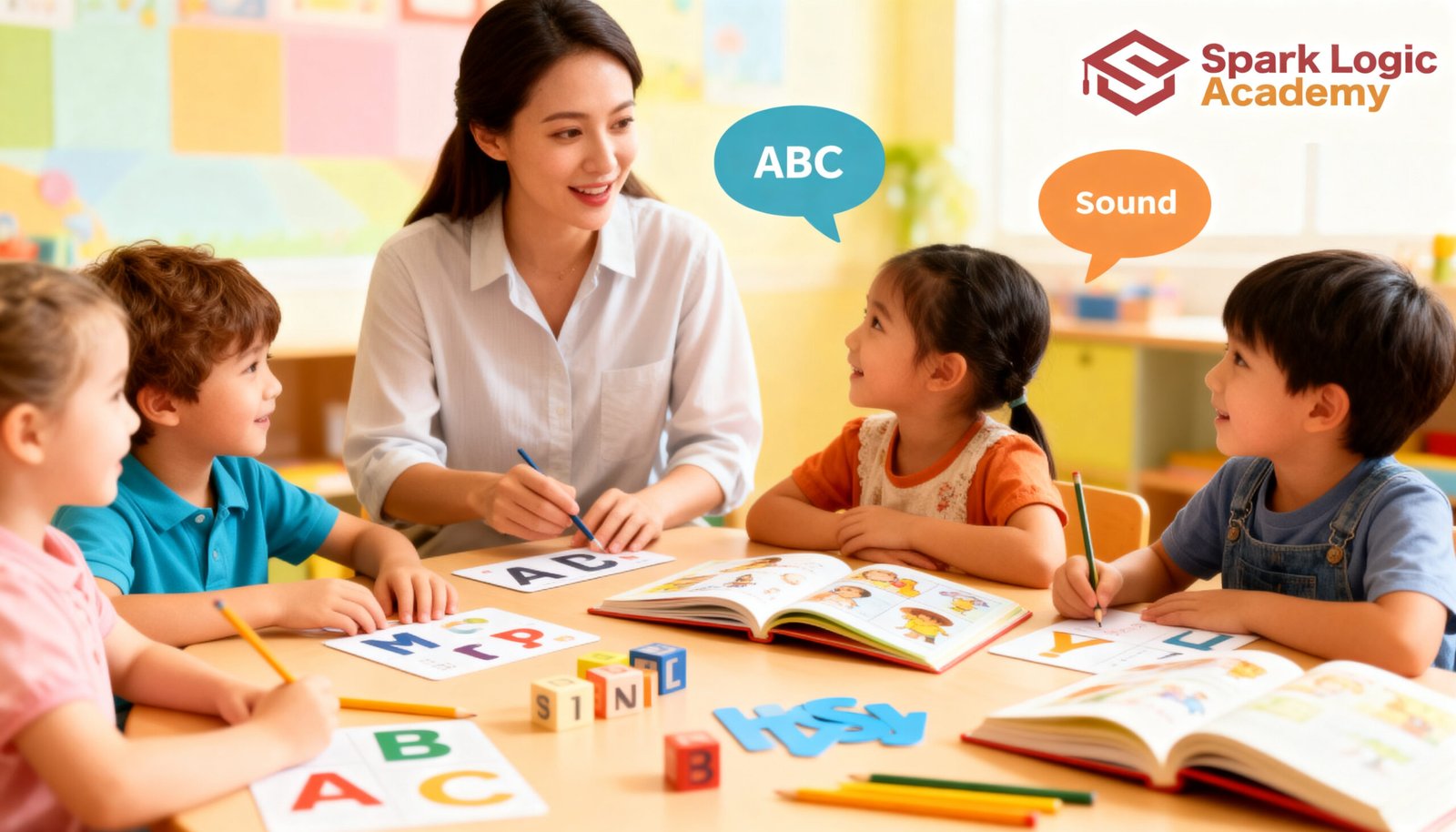
Phonics early reading confidence is one of the most important foundations for young children. Before children can read words smoothly, they need to hear sounds, recognise letters, connect sounds to symbols and feel confident trying.
For children aged 3–5, phonics should feel playful, encouraging and age-appropriate. At Spark Logic Academy in Rochedale, our Phonics program helps young learners build early reading foundations through sound recognition, pronunciation, letter-sound awareness and early literacy activities.
Phonics is a way of helping children understand the relationship between letters and sounds. For example, children learn that the letter “m” makes the /m/ sound, and that sounds can be blended together to form simple words.
This is different from asking children to memorise whole words without understanding how the sounds work. Phonics gives children tools they can use when they meet new words.
For broader early learning guidance, parents can also read the Raising Children Network guide to reading and storytelling, which explains how reading activities support language and literacy development.
Before children can connect letters to sounds, they need to hear sounds clearly. Phonics activities often include listening games, sound matching, rhyming, repeating sounds and noticing the first sound in a word.
These activities help children become more aware of spoken language. This awareness is an important early step toward reading and spelling.
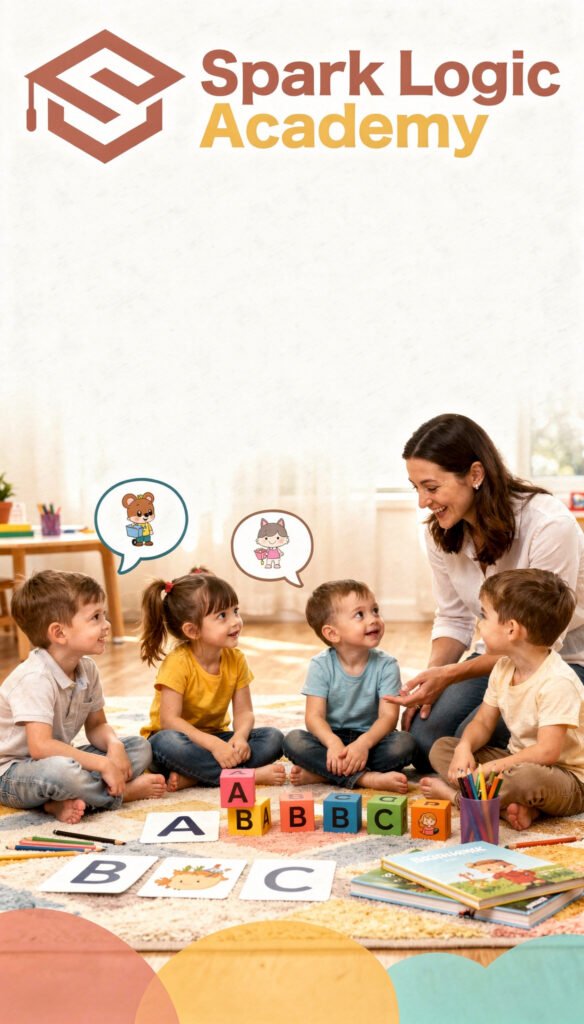
Young children often recognise letters visually before they fully understand what sounds those letters make. Phonics helps connect the visual symbol with the sound.
For example, a child may learn:
Over time, children begin to understand that letters are not just shapes on a page. They represent sounds that help form words.
Phonics can also support pronunciation. When children practise sounds clearly, they become more aware of how words are spoken.
This can help children feel more confident when reading aloud, answering questions, singing songs or participating in classroom activities.
Many children feel nervous when they first start reading. Phonics can reduce that pressure because children learn practical strategies for approaching words.
Instead of guessing every word, children can learn to break words into sounds and blend them together. This gives them a sense of control and progress.
Confidence matters because children are more likely to keep trying when reading feels achievable.
Phonics does not only help with reading. It also supports early writing and spelling.
When children hear sounds in words, they can begin to connect those sounds with letters. This helps them attempt simple writing, even before spelling becomes accurate.
For example, a child may start by writing the first sound they hear in a word. This is an important step in early literacy development.
Children entering Prep often benefit from early exposure to letters, sounds, books and simple listening activities. They do not need to read fluently before school, but early phonics can make the transition feel easier.
Phonics supports school readiness by helping children:
Parents preparing children for school may also explore our Pre-Prep Bridging Course, which supports phonics, early maths, communication and classroom readiness.
Phonics can be very effective in a small-group environment because children have more opportunity to listen, repeat, practise and receive guidance.
Small groups also help children feel more comfortable trying sounds aloud. This is especially helpful for shy learners or children who need more time before they feel confident.
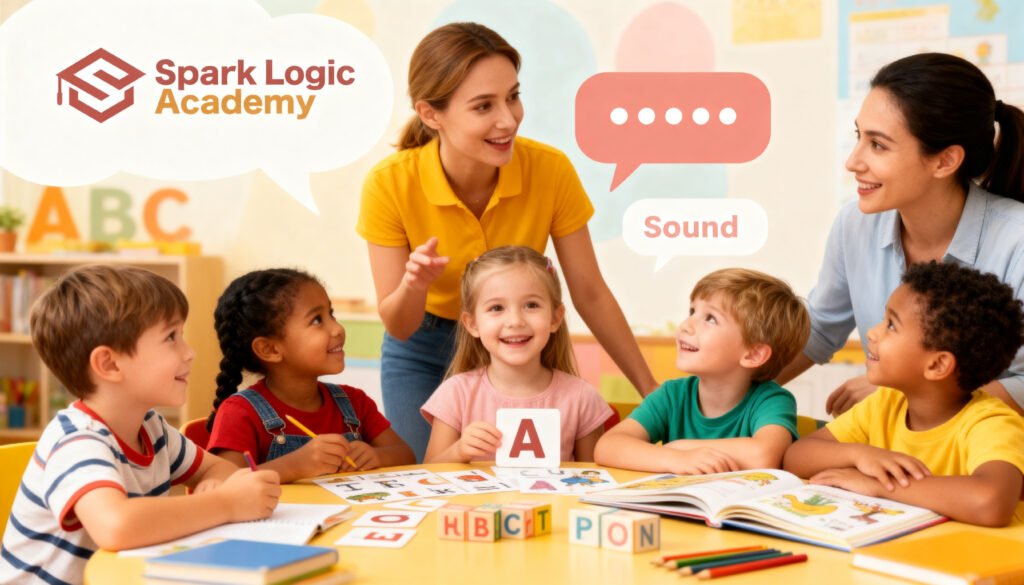
Parents can support phonics through simple daily activities. You do not need complicated worksheets or long lessons.
Helpful activities include:
The most important thing is to keep early reading positive and encouraging.
If your child is aged 3–5 and you want to support early reading confidence, our Phonics program may be a suitable starting point.
If your child also needs broader school-readiness support, our team can help you compare Phonics with Pre-Prep Bridging Course or other Spark Logic Academy programs.
Not sure where to start?
Book a Trial Assessment Ask a Question








Your information will never be shared with any third party