

STEM and coding for kids can help children build more than computer skills. These activities support problem-solving, creativity, teamwork, confidence and logical thinking. In a world where technology is part of everyday life, children benefit from learning how to explore, question, build and create.
At Spark Logic Academy in Rochedale, our STEM: Science & Technology program supports younger learners through hands-on discovery, while our Coding & Technology program introduces children to digital problem-solving and creative technology projects.
STEM stands for Science, Technology, Engineering and Mathematics. For children, STEM learning does not need to be complicated. It can include building, testing, observing, asking questions, solving simple problems and learning through projects.
Good STEM learning helps children move from “What is the answer?” to “How can I solve this?” That shift is important because children begin to see learning as an active process.
For broader context, parents can also read the Australian Government information about STEM education, which explains why STEM skills are important for young learners and future pathways.
STEM activities often begin with a challenge. Children might need to build something, test an idea, compare results or find a better solution.
This helps children practise important questions such as:
These thinking habits can help children in maths, science, reading comprehension and everyday learning.
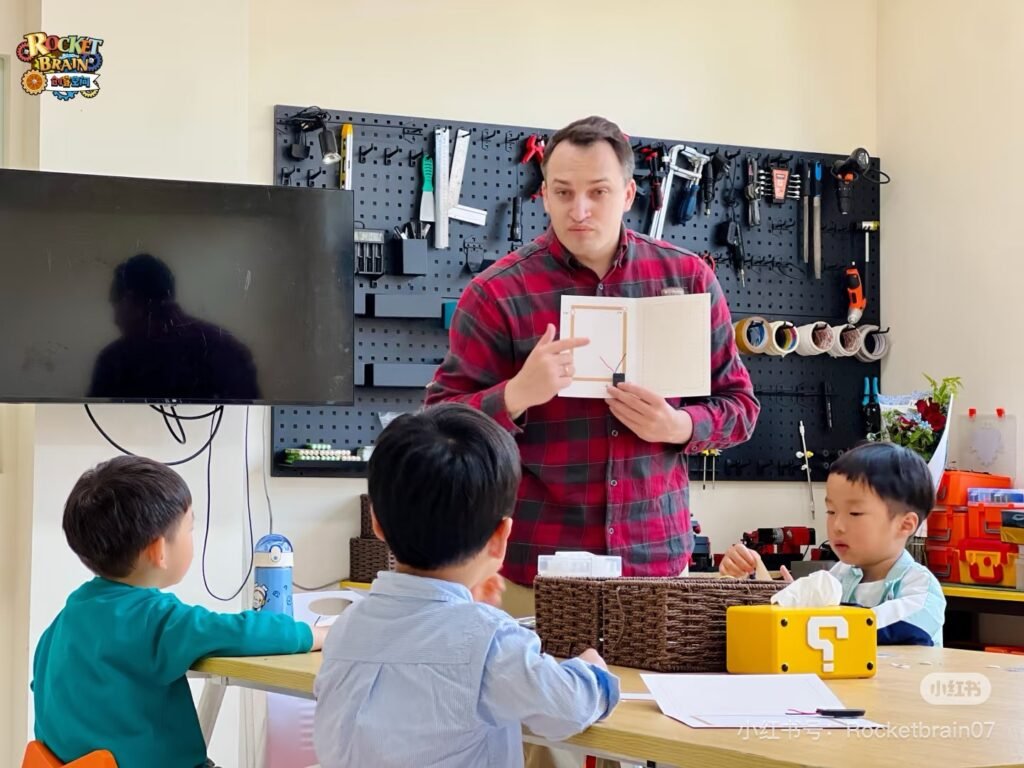
Coding is often seen as technical, but it can also be creative. Children can use coding concepts to make simple games, animations, stories, patterns, robots or digital projects.
When children code, they are not only following instructions. They are creating something from an idea. This helps them see technology as a tool for imagination, not only entertainment.
Coding and technology activities help children practise sequence, cause and effect, patterns, decision-making and debugging.
For example, if a robot does not move the right way, the child needs to check the steps and work out what went wrong. This builds patience, focus and logical thinking.
These skills connect closely with early reasoning and maths. Children who enjoy puzzles, mazes and patterns may also enjoy technology-based problem-solving.
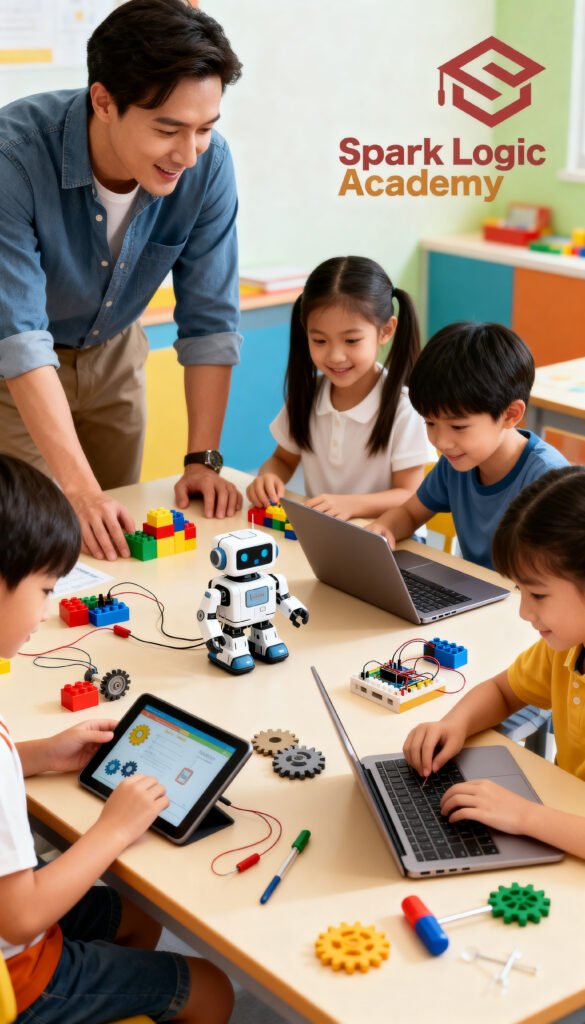
STEM and coding projects often work well in small groups. Children may need to share ideas, explain what they are building, listen to others and take turns testing solutions.
This is valuable because learning is not only academic. Communication and teamwork help children build confidence in group environments.
Some children learn best when they can touch, build, move, test and see results. STEM gives children the chance to learn through action.
Hands-on activities can make difficult ideas feel more approachable. A child who feels nervous about formal learning may become more engaged when the task involves building, experimenting or creating.
Children are surrounded by technology, but using a device is not the same as understanding how technology works. Coding helps children begin to understand the logic behind digital tools.
They learn that technology follows instructions, and that small changes can create different outcomes. This helps children become more confident and thoughtful technology users.
STEM and coding can be introduced in age-appropriate ways. Younger children do not need advanced coding languages. They can start with simple sequencing, building tasks, pattern activities, robots, visual coding, logic games and hands-on experiments.
At Spark Logic Academy, STEM: Science & Technology is designed for younger learners, while Coding & Technology is suitable for children ready to explore digital problem-solving in a more structured way.
Parents can encourage STEM thinking without needing special equipment. Simple activities can still build curiosity and problem-solving.
Helpful activities include:
The goal is not to make learning complicated. The goal is to help children stay curious and confident.
If your child enjoys building, puzzles, technology, robots, experiments or creative problem-solving, STEM and coding may be a good fit.
You can view our learning programs, explore STEM: Science & Technology, or learn more about Coding & Technology.
Not sure where to start?
Book a Trial Assessment Ask a Question








Your information will never be shared with any third party