

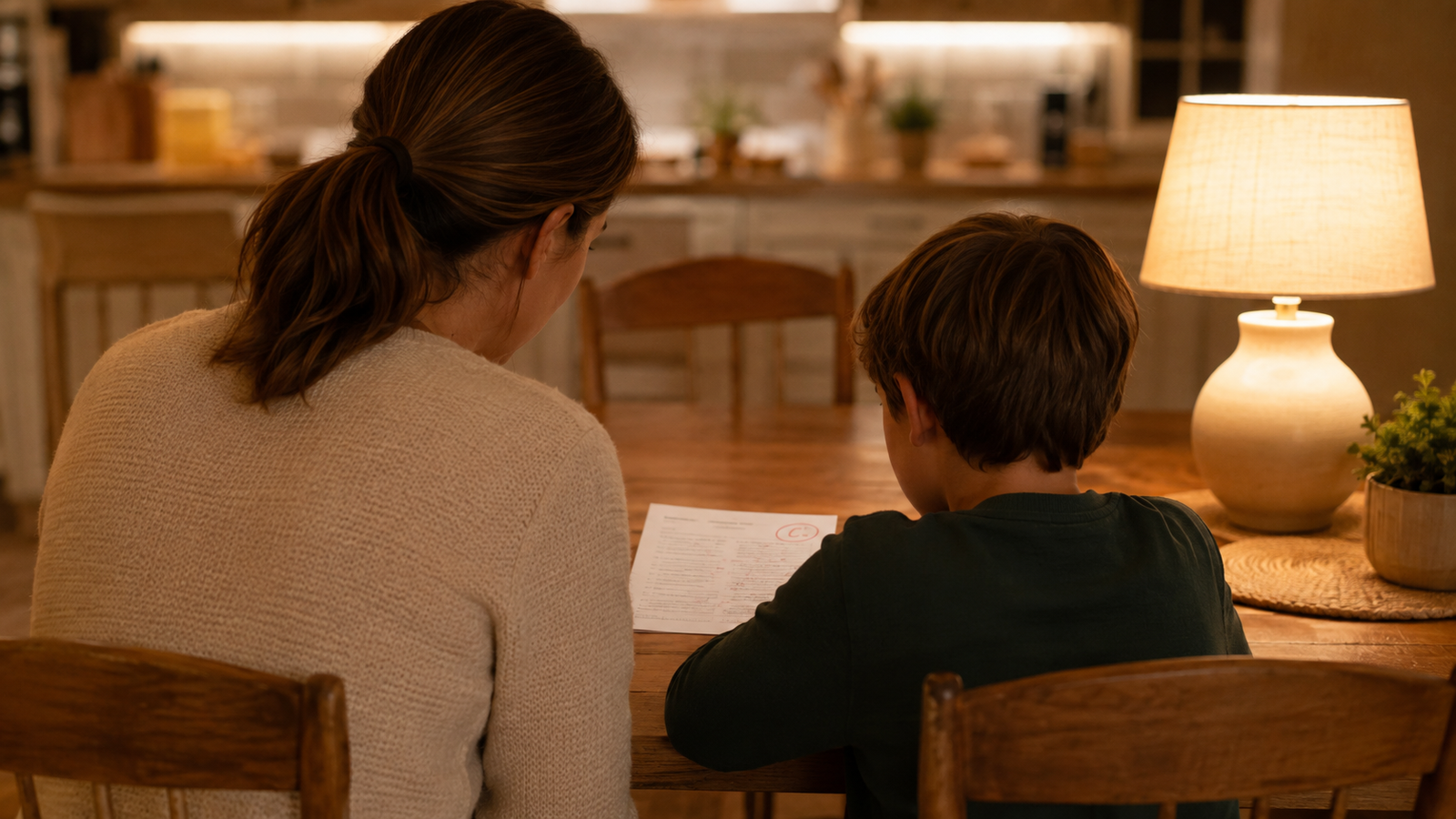
Your child comes home with a result that does not reflect the work they put in. You can see it in their face before they hand it over. What you say in the next five minutes shapes how they approach every test that follows.
Most parents reach for one of three responses: disappointment, comparison, or a plan to study more. None of those responses open the most important question, which is what actually went wrong.
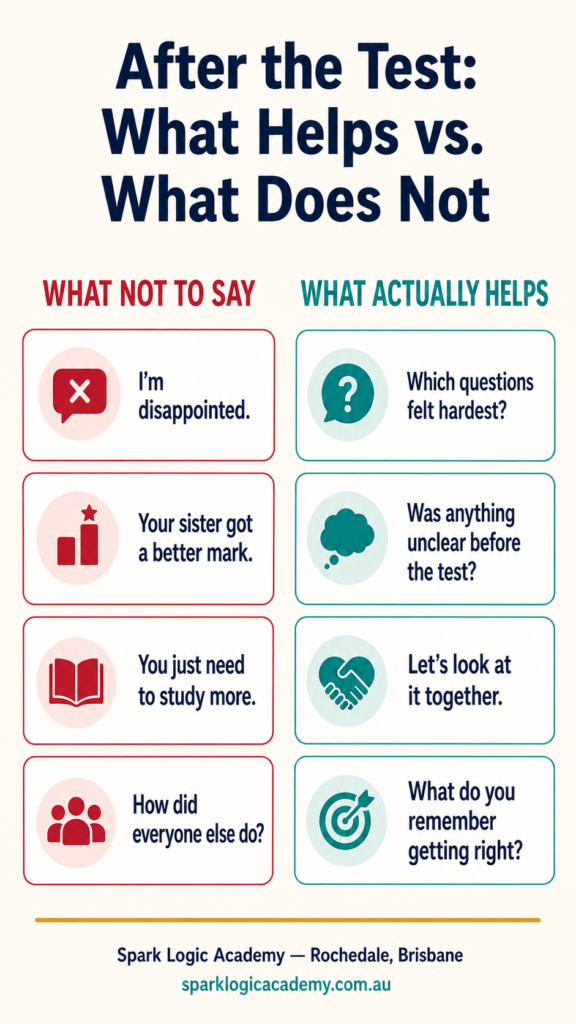
Each of the three common reactions closes a different door.
When a child receives disappointment after a bad result, they learn to hide future results rather than bring them to you. The relationship that should be helping them becomes something to manage.
When a child hears comparison – to their previous mark, to a sibling, to classmates — they learn inadequacy rather than curiosity. Instead of wondering “what went wrong?”, they start thinking “I am not good enough.” That shift in framing makes it harder to engage with the next piece of work, not easier.
When a child is told to study more without first understanding what failed the first time, they apply more effort in the wrong direction. If the foundation is missing, repetition without correction just reinforces the gap.
The conversation that actually helps is quieter than most parents expect. It starts with questions, not statements.
The difference between a child who recovers quickly from a bad result and one who spirals is rarely ability. It is usually the quality of the conversation that happens immediately afterwards.
Every new student at Spark Logic Academy begins with a free 30-minute one-on-one trial assessment. It is not a test. It is a conversation – exactly the kind described above.
Our tutors ask which questions felt hardest. They find where the understanding actually broke down. They look at what the student knew, what they half-knew, and what was missing entirely. Then they build a plan that addresses the real issue, not just the surface result.
Small groups of up to eight students mean every session stays personal. Qualified teachers across Maths, English, Phonics, Science, Logic, STEM and Coding, and Early Learning mean the conversation about results always goes somewhere productive.
If your child has come home with a result that doesn’t reflect the work they put in, the free trial is the right starting point. Book a free 30-minute trial assessment and find out exactly where they are and what they need next.
Book a Free 30-Minute Trial
One-on-one. Every new student. Find where your child actually is – and what they need next.
WhatsApp: +61 494 719 869
Phone: 0417 226 366
Email: info@sparklogicacademy.com.auBook Online
Spark Logic Academy | 11 Lorisch Way, Rochedale QLD 4123 | sparklogicacademy.com.au








Your information will never be shared with any third party