


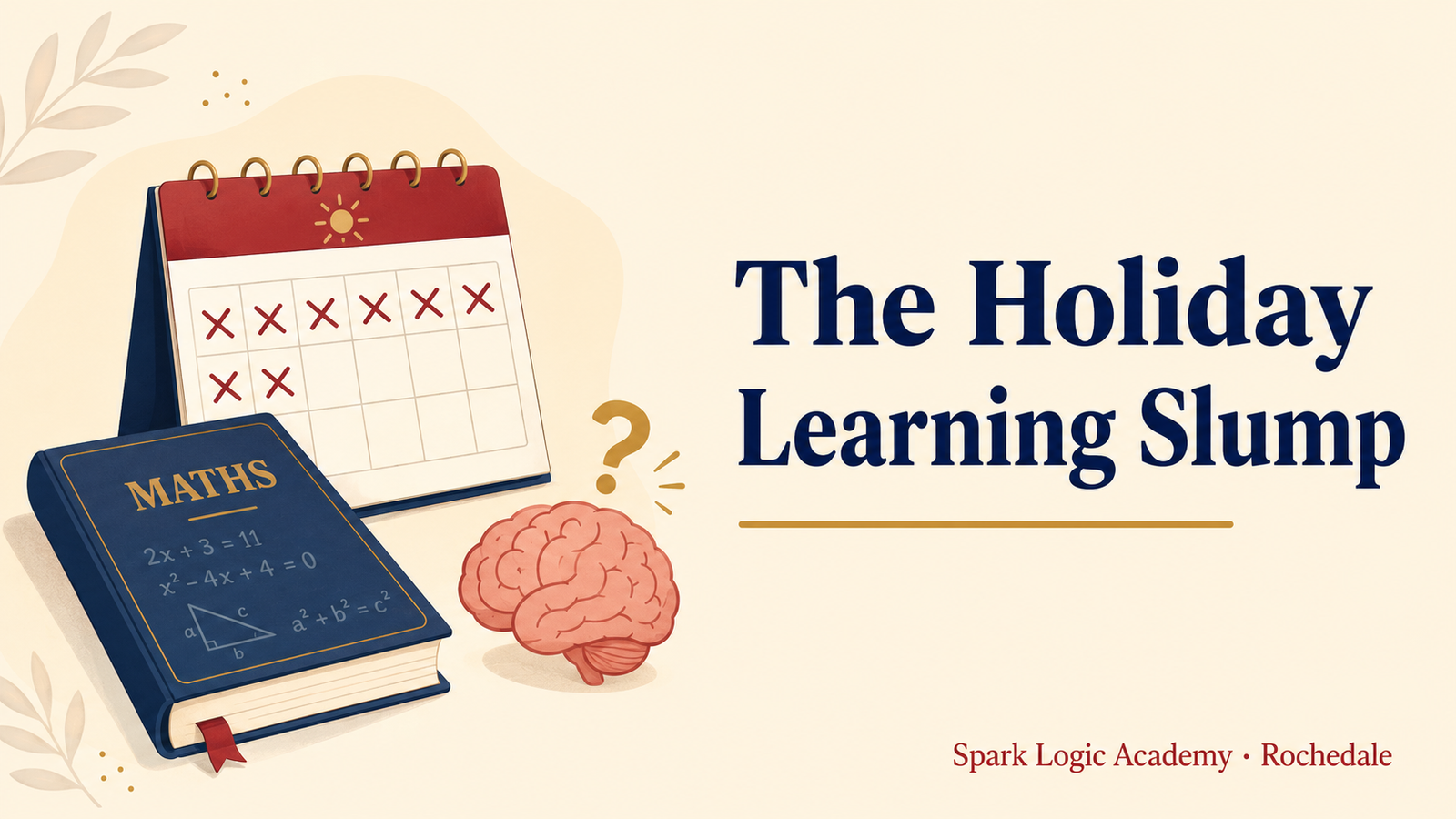
Most parents notice it in the first week back at school. Their child seems slower to answer questions they handled confidently in Term 2. Maths homework takes longer. They ask to be reminded of things they already knew. The frustration is real, and so is the confusion: how did they forget so much in just two weeks?
The answer has a name. It is called the holiday learning slump, and it is a well-documented pattern in educational research. Understanding why it happens, and which children are most vulnerable, is the first step to doing something about it.
The holiday learning slump refers to the measurable loss of academic skills that occurs when children are away from structured learning for an extended period. It was first studied in the United States under the name the “summer slide,” but research by the Australian Council for Educational Research (ACER) and others confirms the same pattern occurs in Australian schools during any extended holiday period.
The underlying cause is not laziness or poor memory. It is simply how human memory works. Skills that are not regularly practised become less accessible over time. This is true for adults as much as for children, but children in primary school are at a particular disadvantage because many of the skills they are building, such as phonics decoding, multiplication facts, and sentence construction, depend on automaticity. They need to be fast and effortless, and that effortlessness only comes from consistent repetition. A break in that repetition shows up quickly.
Research by Cooper and colleagues, which meta-analysed over 39 studies on the topic, found that students lose on average one to three months of learning over a summer break. Studies tracking Australian students across shorter holiday periods find smaller but still significant effects, particularly in mathematics.
The figure that is most useful to understand is not the average, but the variance. Children who come from homes where learning is actively supported during holidays, where reading continues, where games involve numbers and reasoning, lose significantly less. Children in homes where learning stops entirely during holidays lose significantly more. This means the holiday learning slump is partly predictable and partly preventable.
Not all subjects are equally affected. The research is consistent on this point.
Mathematics is the most vulnerable subject. Specifically, procedural maths skills, including arithmetic, times tables, written algorithms, and multi-step problem solving, rely heavily on automaticity. When a child stops practising these processes, the mental pathways that make them fast and reliable begin to weaken. The child does not lose the concept entirely, but what was fluent in Week 10 of Term 2 can feel effortful and slow in Week 1 of Term 3.
Reading comprehension is affected when reading stops. Children who continue to read during holidays, even casually, tend to maintain their comprehension skills well. Children who do not read at all during the break can experience a noticeable decline in their ability to process and recall written information, particularly in the more complex texts they encounter at school.
Writing mechanics regress without practice. Spelling, punctuation, and sentence structure are learned through repeated writing. A holiday period with no writing practice at all means that Term 3 Week 1 often involves re-establishing habits the teacher thought were already in place.
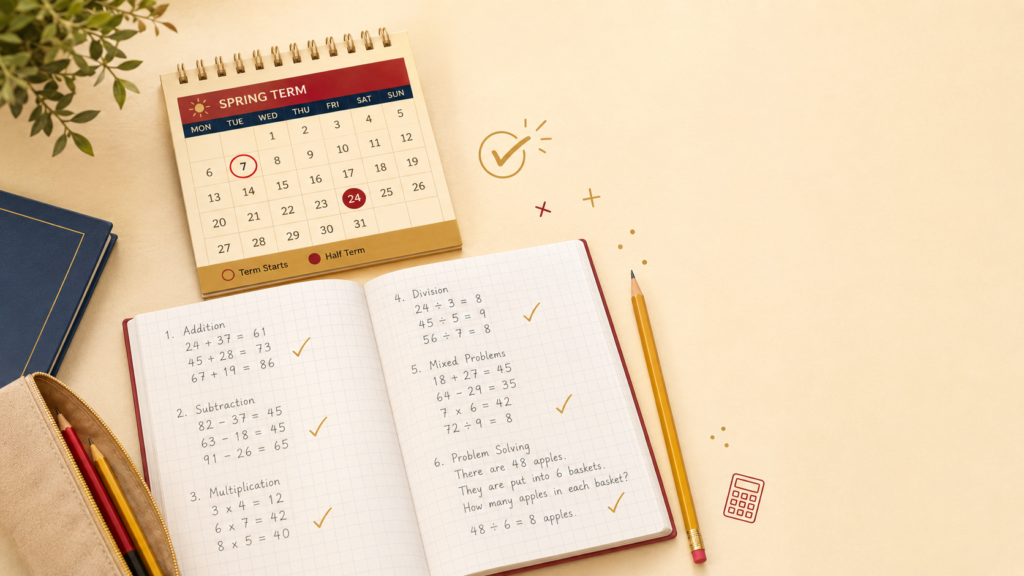
The holiday learning slump affects all children to some degree, but certain groups experience it more sharply. Children who were already finding a subject challenging at the end of Term 2 are the most vulnerable. A child who understood long division with effort will find it considerably harder after two weeks away. A child who was building confidence in reading will lose ground faster than a child who was already a fluent reader.
Younger children are also disproportionately affected, because the foundational skills they are developing, phonics, number sense, fine motor writing skills, depend on frequency of exposure. A break in that exposure has a larger relative impact when the skill is still being consolidated.
The slump is not always obvious immediately, but these three signs tend to appear in the first week or two of a new term:
1. They take longer to recall things they knew before the holidays. If a child could answer a maths question quickly in Term 2 but now pauses, counts on fingers, or needs to be talked through the same concept again, the slump is showing up in processing speed. The knowledge is still there, but the access to it has slowed.
2. They are making mistakes they were not making in Term 2. Spelling errors on words previously mastered, arithmetic mistakes on problems that were reliable, skipping punctuation that had become habitual. These are not signs of regression in understanding but of a drop in automaticity.
3. They are more frustrated or avoidant than usual. Frustration in children is often a response to effort. When things that felt easy now require more effort, children feel it as difficulty, and difficulty can quickly become avoidance. A child who seemed happy at school in Term 2 but starts dreading it in Term 3 may be experiencing the compounding effect of the slump meeting new, harder content.
The holiday learning slump is reversible, but it responds best to early, consistent action. Here is what works.
Structured daily practice, even briefly. Twenty minutes of focused maths or reading practice per day is enough to significantly reduce the effect of a holiday break. It does not need to feel like homework. Maths card games, reading aloud together, or writing a short journal entry are all effective.
Start before the term begins, not after. The gap tends to widen in Week 1 of a new term because children are encountering new content at the same time their recall of old content has softened. Starting a structured routine in the last week of holidays means Term 3 Day 1 is a catch-up day instead of a falling-further-behind day.
Address the specific subject, not just the general habit. If your child was already finding maths difficult at the end of Term 2, the holiday slump in maths will be larger. Targeted practice in that specific subject, ideally with a teacher who can identify exactly where the gap is, will close the gap faster than general revision.
Get an assessment before assuming the issue is attitude. Parents sometimes interpret the Term 3 Week 1 slowdown as reluctance or defiance. It is usually neither. A short assessment that identifies which specific concepts have slipped, and starts rebuilding from there, is far more effective than a general push to try harder.
One of the most effective responses to the holiday learning slump is small-group tutoring that starts at the beginning of a new term, or ideally just before it. The reason is structural. In a classroom of 25 to 30 students, the teacher cannot easily assess which students have experienced significant slippage and which have not. Teaching continues at the pace the curriculum requires, which means children who have lost ground are trying to keep up with new content before the old content has been re-established.
In a small group of up to eight students, a qualified teacher can identify exactly which concepts have slipped and work on them directly, while still keeping pace with what the class is covering. The child is not falling behind the classroom; they are being brought back to readiness at the same time as they are moving forward.
At Spark Logic Academy in Rochedale, every new student starts with a free 30-minute trial assessment. The assessment identifies where they are strong and where the holiday gap has opened up. From there, the programme is structured to close the gap as efficiently as possible.
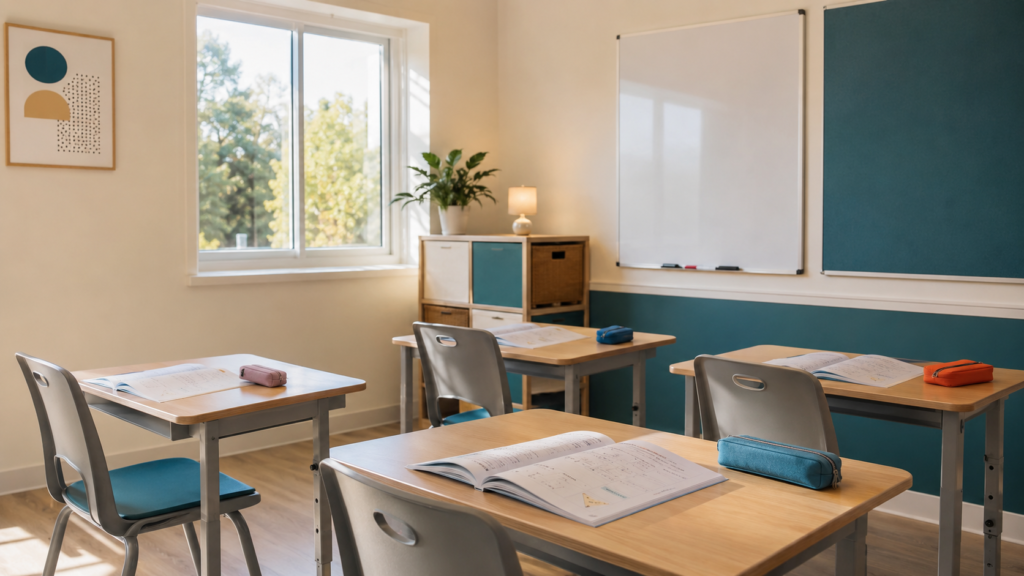
Term 3 starts Monday 13 July 2026. A free 30-minute trial assessment identifies exactly where your child is at and what they need. Places in Rochedale are limited.
WhatsApp: +61 494 719 869
Tel: 0417 226 366 · info@sparklogicacademy.com.au
11 Lorisch Way, Rochedale QLD 4123 · sparklogicacademy.com.au








Your information will never be shared with any third party