


If homework time feels like a battle in your house, you are not alone. Homework resistance is one of the most consistently reported frustrations among parents of primary school children. The nightly negotiation, the tears, the procrastination, the outright refusal — it is exhausting for everyone.
But here is what most parents do not realise: children who hate homework are almost never just being difficult. Homework resistance almost always signals something specific, and once you identify what is actually driving it, it becomes much easier to address.
This article covers the five most common real reasons children resist homework, what to do about each one, and how to tell when resistance points to something bigger than habit.
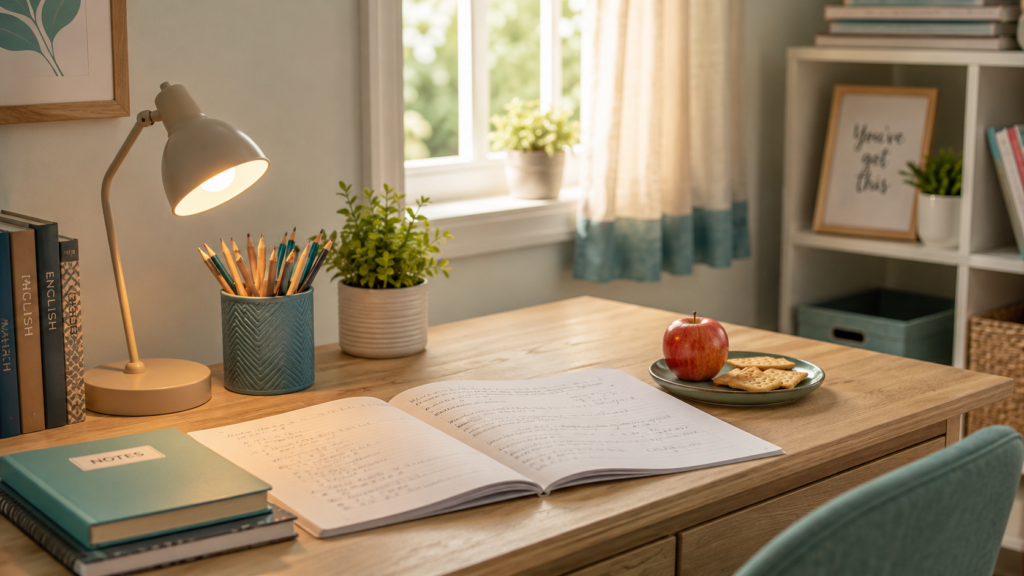
This is the most common cause of homework resistance, and the one parents most often miss. When a child is asked to do work that is genuinely beyond their current understanding, avoidance is a completely rational response. Sitting with a worksheet they cannot complete feels pointless and embarrassing.
If your child consistently resists one type of homework — always maths, always reading comprehension, always writing — that pattern almost always points to a gap in foundational knowledge rather than a character problem. A child who cannot yet multiply confidently will not sit willingly with multiplication homework.
Primary school children spend six hours in an environment that requires sustained attention, social navigation, emotional regulation, and academic effort. By the time they arrive home, many are genuinely depleted. Asking them to continue immediately is like asking an adult to work a second shift the moment they walk through the door.
This does not mean homework should be skipped. It means timing matters. Most children need a genuine break — outdoor time, a snack, unstructured play — before they can re-engage with focused work. Fifteen to twenty minutes of transition time after school makes homework noticeably easier for most children.
Children regulate themselves through predictability. When homework happens at different times each day — sometimes right after school, sometimes after dinner, sometimes “when we get to it” — children treat it as negotiable. Every session becomes a fresh negotiation, and resistance becomes the expected dynamic.
A fixed homework time, the same time every afternoon, removes most of that negotiation automatically. When children know homework always happens at 4:30pm, they stop spending energy resisting or bargaining. The routine decides, not the parent and not the child.
Trying to do homework with the television on in the background, a sibling playing nearby, or at a cluttered kitchen bench significantly increases the cognitive effort required. Children are more distractible than adults and more affected by background noise and visual clutter.
A consistent homework space — even just a cleared corner of a table with the television off — makes a measurable difference. It does not need to be elaborate. It needs to be predictable, relatively quiet, and free from competing demands on attention.
Some children who appear to hate homework are actually experiencing anxiety about performance. They would rather not try than try and fail. This tends to show up as extreme procrastination, sudden claims of illness before homework time, or emotional dysregulation that seems disproportionate to the actual difficulty of the task.
Perfectionism and fear of failure are more common in primary school children than most parents expect, and they are often invisible at school where the social pressure to appear capable is high. At home, with a parent watching, the pressure intensifies.
If your child melts down specifically when they make a mistake, or refuses to attempt work unless they are certain they will get it right, anxiety rather than attitude is likely the driver.
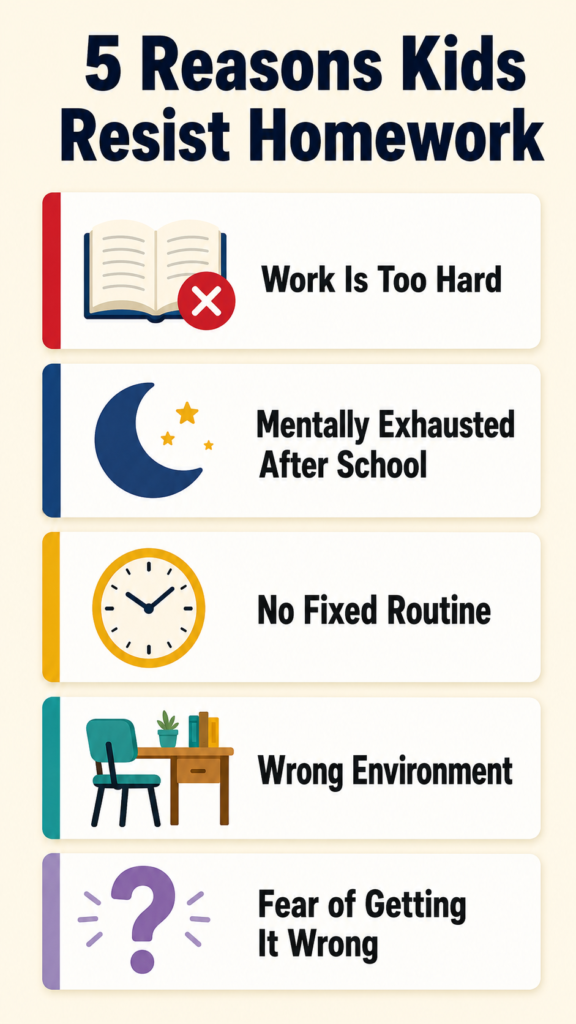
The fix depends on the cause. Here is a practical response to each of the five:
There is an important distinction between a habit problem and a knowledge gap.
A habit problem responds to routine, environment, and timing adjustments within two to three weeks. If you introduce a consistent homework time and a decent workspace and resistance drops significantly, the driver was structural.
A knowledge gap does not respond to routine alone. If your child has a fixed homework time, a good environment, and adequate rest — and they still cannot do the work independently — the work itself is too hard. No amount of routine adjustment closes a foundational maths gap or a reading comprehension deficit.
This is worth reading alongside our articles on signs your child needs a tutor and how to set up a study routine before Term 3, both of which explain how to recognise when structure alone is not enough.
At Spark Logic Academy in Rochedale, we work with children whose homework resistance is driven by genuine knowledge gaps. Our small-group programmes identify exactly where a child’s understanding breaks down and build from that point directly, not from where the curriculum assumes they should be.
Every new student starts with a free 30-minute trial assessment that tells us exactly what is secure and what needs work. From there, students join a small group of up to eight with a qualified teacher.
When the gap closes, homework gets easier. Not because the routine changed — because the work itself becomes manageable.
Find out exactly what is making homework hard. Free 30-minute trial for every new student. Small groups. Qualified teachers. Ages 3 to 12. Rochedale, Brisbane. Term 3 places available now.
WhatsApp: 0494 719 869
Tel: 0417 226 366 | info@sparklogicacademy.com.au
11 Lorisch Way, Rochedale QLD 4123
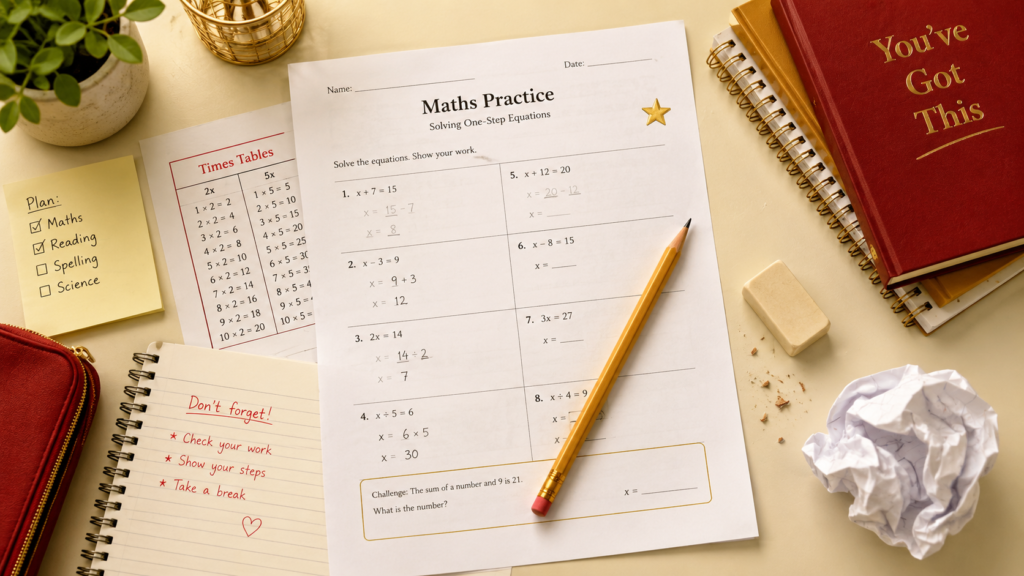
Is it normal for children to hate homework?
Homework resistance is extremely common in primary school children. Most children who resist are responding to something specific — exhaustion, missing knowledge, lack of routine, or a poor environment — rather than being deliberately difficult. Identifying the actual cause makes it much easier to address.Should I force my child to do homework?
Forcing homework through confrontation tends to increase resistance over time. A better approach is to address the underlying cause so that homework becomes something the child can actually do, rather than something they are compelled to endure.How long should homework take for primary school children?
General guidelines: Prep to Year 2: 10 to 20 minutes. Year 3 to 4: 20 to 30 minutes. Year 5 to 6: 30 to 45 minutes. Homework that consistently takes longer than these ranges suggests the work is too hard or focus and environment need attention.What if homework resistance is about anxiety, not a gap?
Performance anxiety in primary school children is real and more common than most parents expect. Signs include extreme procrastination, disproportionate emotional responses to mistakes, and refusal to attempt work unless certain of success. A targeted assessment can help identify whether anxiety is compounded by genuine knowledge gaps, which is often the case.At what point should I consider tutoring?
When the routine is in place, the environment is decent, and your child still cannot do the homework independently — that is when structural fixes have run out and targeted support is the right next step. Contact Spark Logic Academy for a free trial assessment.








Your information will never be shared with any third party